




26th May 2026
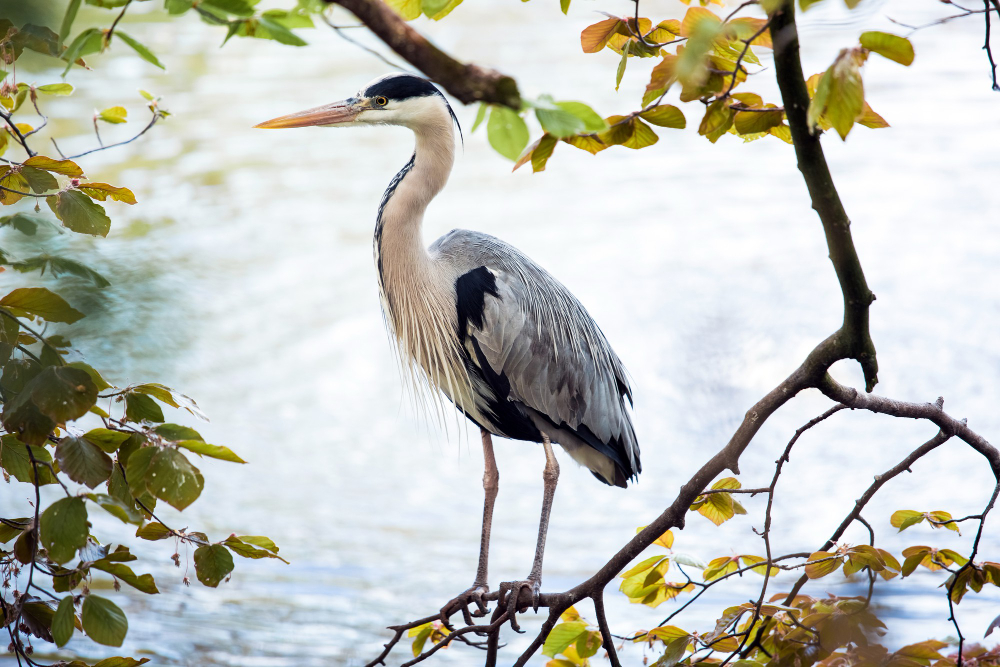
There’s no nicer way to unwind than sitting by your garden pond watching your fish swim through the clear water. But for many pond owners the idyllic scene is shattered by the arrival of a heron looking for his next meal.
Herons are highly skilled hunters with excellent patience and eyesight, making garden ponds an easy target. Whether you have small goldfish or valuable koi, without the right precautions a local heron can quickly clear you out. Fortunately, there are plenty of effective ways to discourage these unwelcome visitors, from simple visual deterrents and clever planting ideas to high-tech gadgets and physical barriers.
In this guide, we explore some of the best heron deterrents for ponds, helping you protect your fish while still keeping your pond looking attractive and enjoyable all year round.
1. Heron decoy
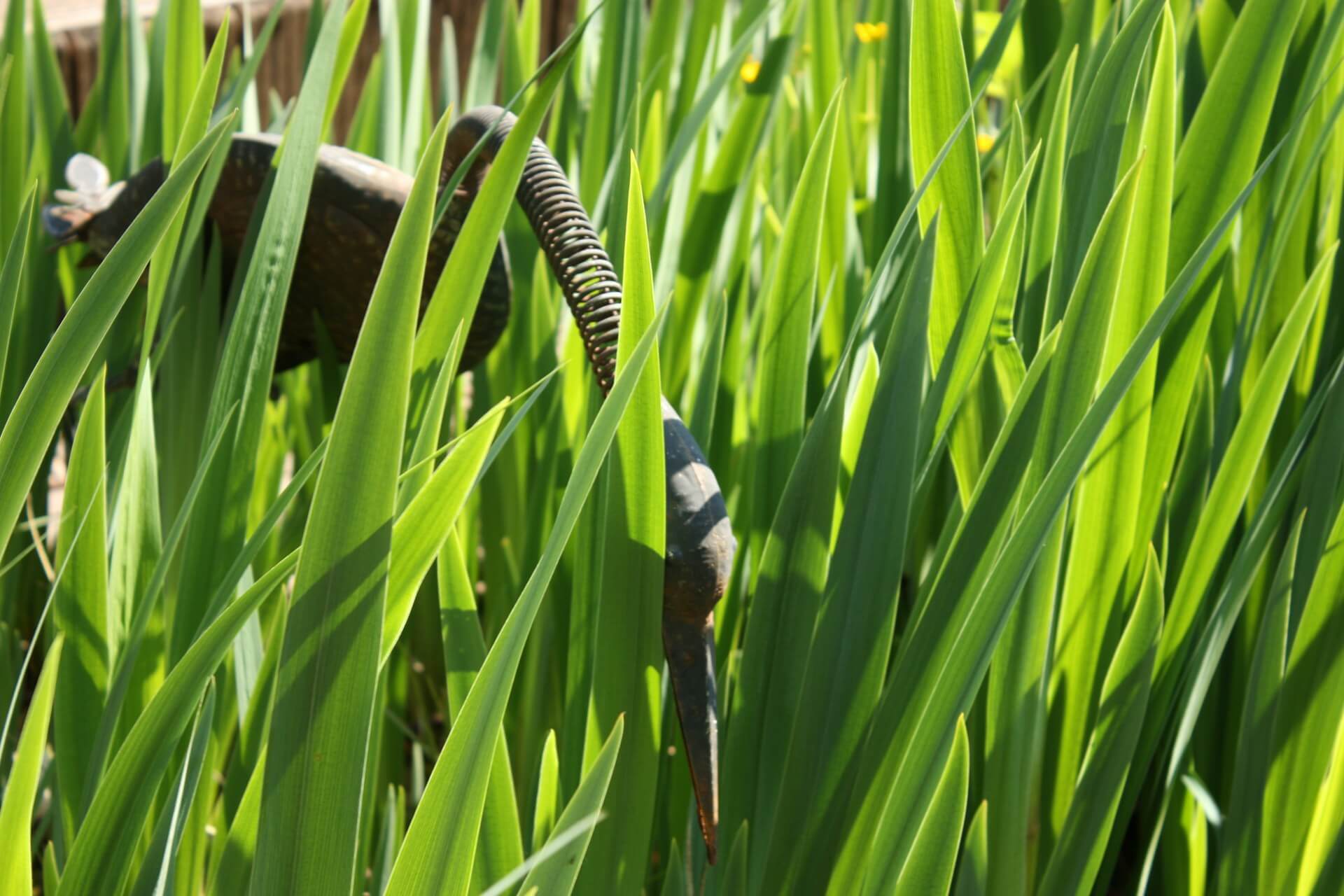
photo by Boudewijn Huysmans
The quickest heron deterrent for ponds is your very own heron. A decoy of course! You can find a range of decoy herons from very realistic to more stylised metal sculptures, but they are all effective. Herons are very territorial creatures. If they see another heron is already in that spot, they will usually steer clear
What to do: simply place your heron decoy by your pond making sure it can be seen easily from the sky.
If you want to have little more fun, why not treat yourself to an emerging alligator head decoy? Alligators are the heron’s natural predator in the wild and he will want to make sure to steer well clear of becoming dinner.
2. Fish cave
Another simple installation to protect your pond from fishing herons is to give your fish somewhere to hide. This could be in the form of a fish cave placed inside your pond or a koi castle dug into the pond during construction. Herons can only fish what they can see so if your fish have a place to hide away they have a much better chance of not being caught.
What to do: take a plastic planter and cut an entrance at one side big enough for your fish to easily get in. Make sure to sand the edges so as not to cause injury to your fish. Submerge the fish cave right to the bottom of the pond, you may need to weigh it down with some slate. If you have a big pond or lots of fish, you may want to add a couple of hiding places like these.
3. Plants
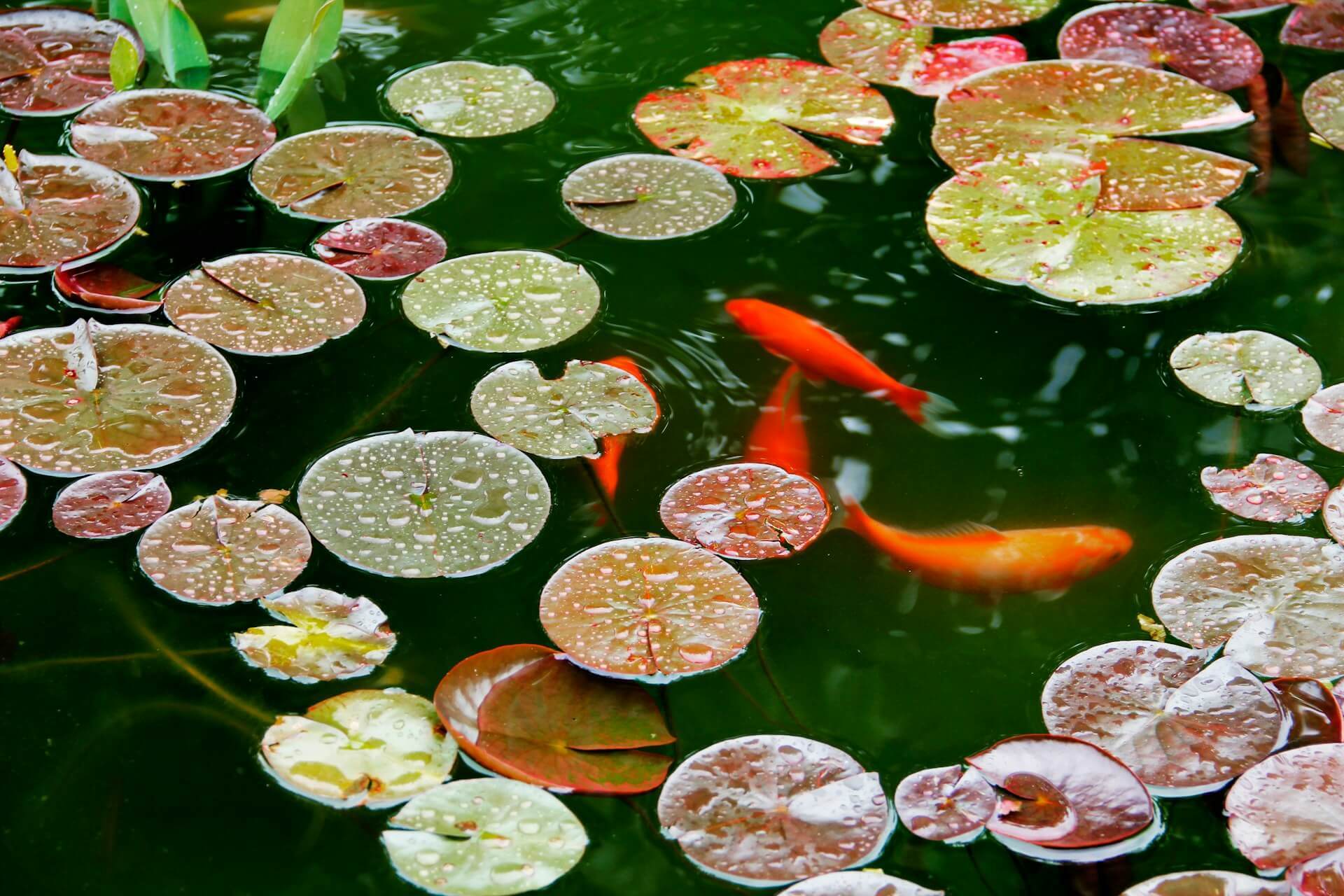
photo by Jan Canty
Not only do plants improve water quality and look great they ae also another great way to provide shelter for your fish. Floating plants such as lilies, duck weed and water lettuce provide a floating roof for your fish to hide beneath, making it much harder for predators like herons and seagulls to find them. However, it’s worth bearing mind that it also makes it much harder for you to locate them too, so if you like watching your fish this may not be the ideal solution.
What to do: plant floating vegetation generously around the pond. If you have larger fish such as koi that have a tendency to pull up your plants, great solution is to plants your lilies in floating pond nets, so their roots are protected.
3. Windchimes
Another simple fix to keep predators from your pond is windchimes. Bamboo chimes tie in really well if you have a Japanese style pond.
If there’s one thing herons don’t like its noise and even the sound of chimes have proven to be effective at startling the heron away from the pond. The only issue with windchimes is that if they’re static, they won’t produce noise, so they are not the most reliable heron deterrent for ponds.
What to do: hang a windchime from a tree or pole next to your pond. Metal windchimes are doubly effective as they reflect sunlight which can dazzle the birds, scaring them away.
4. Moving water

Water features may seem purely ornamenta, however they can be a great heron deterrent for ponds. The ripples made by fountains and bubbling rocks disturb the surface of the water lessening visibility for flying herons.
What to do: add a water feature to your pond. The Oase Pond Jet Eco premium is a great choice. A smart floating fountain it can be installed in any pond type and has a variety of water patterns to choose from, with water spurts of up to 3.75m.
5. Fishing line
The heron likes to stand in water to fish, so one effective method of pond protection is to stretch fishing line around or over your pond. The objective is to disrupt the heron’s movement, making it difficult to navigate the water and eventually discouraging it from hunting there altogether. Fishing line is far subtler than pond netting, making it a more aesthetically pleasing option; however, experienced herons may still manage to navigate around the lines.
What to do: place small stakes around the perimeter of your pond. Stretch a thick fishing line between the stakes criss-crossing the lines of creating a type of web effect. You want to make it irritatingly awkward for the heron to walk but it’s important to install the line carefully so to reduce the risk of wildlife becoming tangled or injured.
6. Overhead cables
Most people think of adding things to the pond itself when guarding their fish from predators. But when it comes to herons, a lesser-known trick is to actually prevent them from even entering your garden. One great method is by installing overhead cables that stop the heron being able to fly down to the pond.
What to do: choose a thick cable such as a white washing line that the herons can easily spot from the air. You want the heron to see it and avoid it rather than fly into it. Stretch the cable over your pond about 9ft off the ground and about 2ft apart, attach each end to anchor point such as posts, trees, hedge or side of house. You may need to add more lines depending on the length of the garden.
Note: if you have particularly tasty looking fish, and a particularly clever heron, it may land somewhere unobscured and then walk in for his snack.
7. Pond net
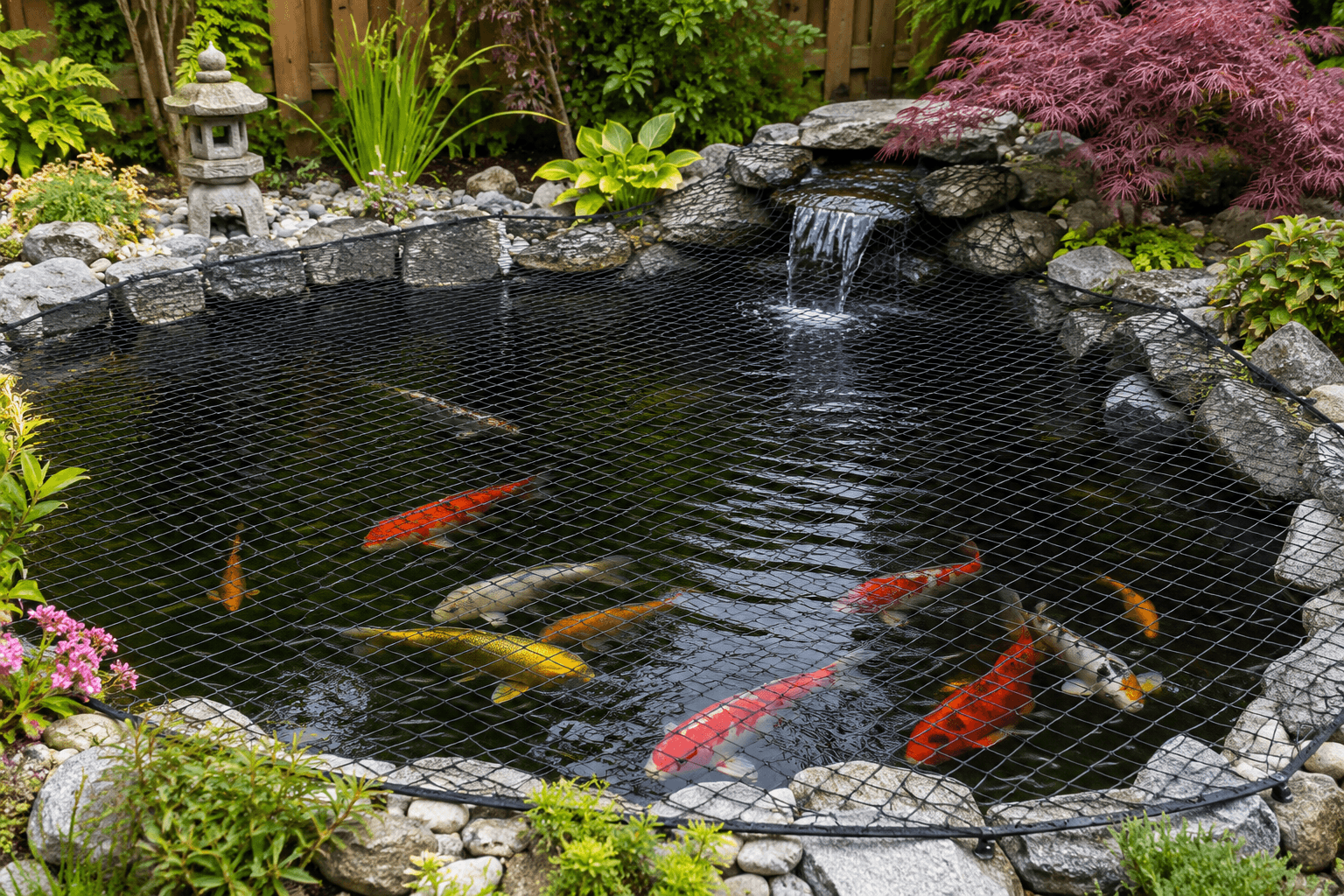
Probably the most effective way of keeping your fish safe from fishing birds is a pond net, however it’s also the most unattractive. Whether you opt for a surface level net or a pyramid net this barrier is the securest form of protection. Another advantage of a net they’re also great at catching leaves, helping keep your pond clear, water healthy and easing pressure on filtration systems.
What to do: to install, stretch the net evenly across the pond surface and secure it tightly around the edges using anchor pegs or fixings, ensuring there is enough tension to prevent sagging into the water. Alternatively place a pyramid net over the pond making sure it encapsulates all the pond surface area.
8. Electric fence
For an effective long-term heron deterrent, an electric fence is a great choice especially if you have persistent predators. The mild electric pulse acts as a safe but memorable deterrent. It may seem extreme but electric fencing works day and night and does not rely on wind, movement or sunlight to remain effective. It’s not the most discreet option aesthetically, but it offers reliable protection for ponds with valuable fish stocks.
What to do: install a low-voltage pond electric fence around the perimeter of your pond, positioning the wires a few inches above ground level and around the pond edge. Make sure the system is specifically designed for garden pond use and regularly check that vegetation is not touching the wires, as this can reduce performance.
9. Laser guard
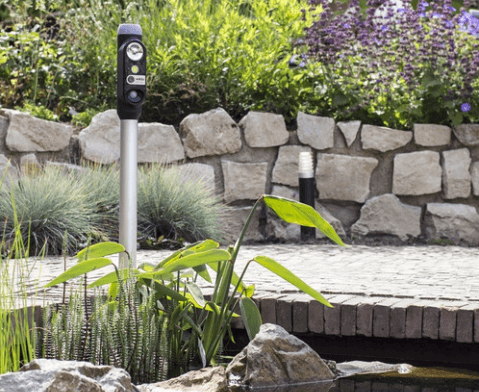
If you like your tech then this option may be for you. The Velda Laser Guard combines motion detection, flashing lights, green laser beams and sound effects to deter hungry herons and other predators before they reach your pond. The device detects movement up to 12 metres away within a 100° arc. If movement is sensed, it activates a sequence of deterrents specifically designed to startle birds and making them reluctant to approach the water.
What to do: position the Laser Guard near the pond edge with a clear line of sight across the water ensuring the motion sensor is unobstructed by plants or garden features. The built-in sound settings can also be adjusted or switched off if you’re concerned about disturbing neighbours.
Layer up
When it comes to pond protection from herons, the key is in using multiple defences together rather than relying on a single method. While each heron deterrent for ponds, whether visual, physical or electronic, can help on its own, herons are persistent and adaptable hunters.
By combining a few of these methods, you can effectively keep herons at bay, protecting your fish and maintaining your garden as a calm, predator-free space to relax and unwind in.
If you have any questions regarding your pond set up or any of the products featured, then get in touch and we’ll be happy to answer your questions