




22nd Jun 2026
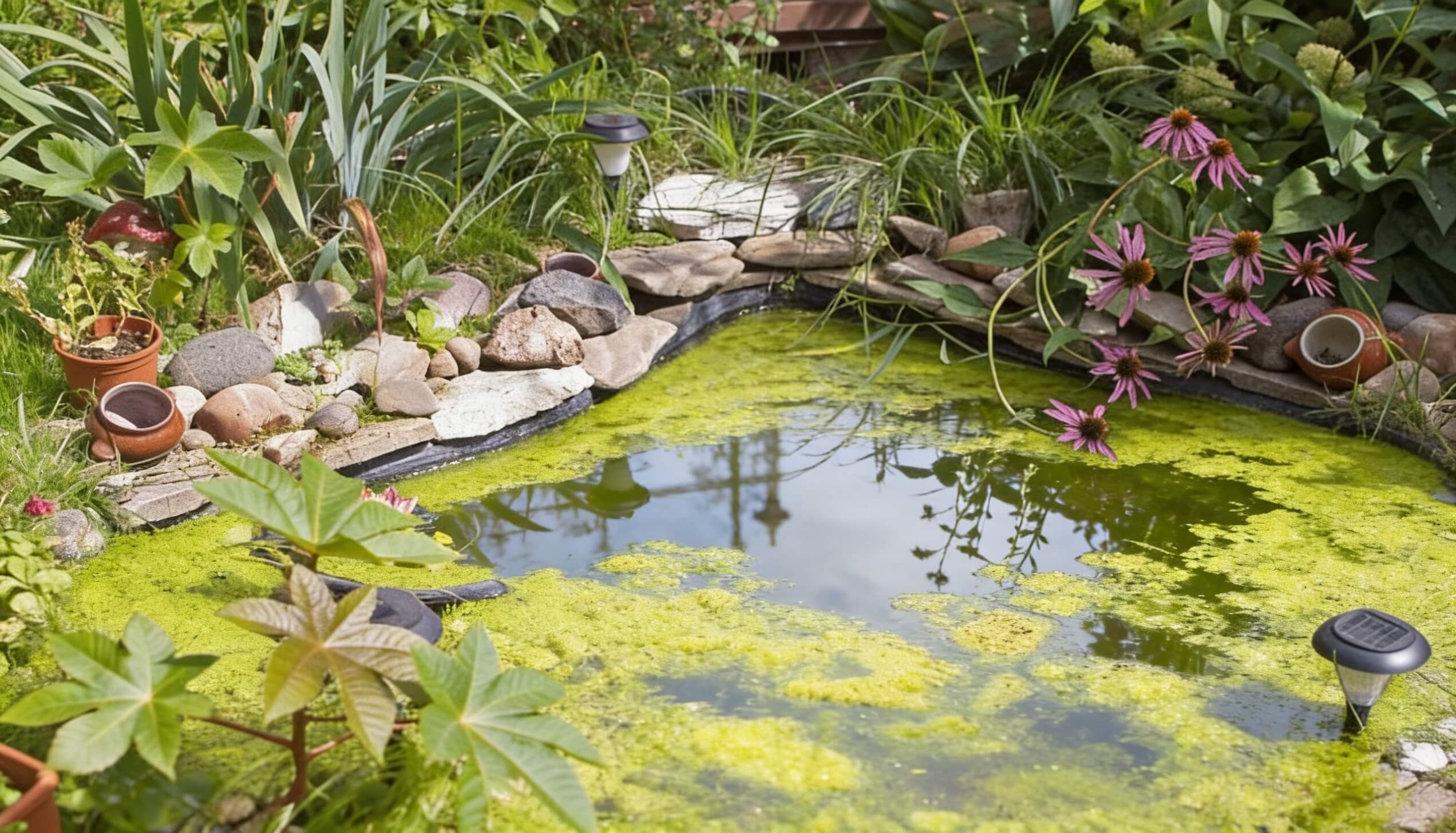
If you've ever stood beside your pond with a stick wrapped in stringy green slime, wondering why blanket weed always seems to return, you’re in good company. For many pond keepers, fighting blanket weed seems like a never-ending battle. One week you have clear water, the next your algae is back clinging to your plants, water features and pond filter.
It’s an endless cycle of remove, treat, repeat. The question is, how do we put an end to the cycle?
Blanket weed isn’t the problem, it’s the symptom
Also known as string algae or filamentous algae, blanket weed is a fast-growing algae that forms long green strands across pond walls, plants, waterfalls and filtration equipment.
It thrives when three things come together:
- Sunlight
- Nutrients
- Warm water
Ironically, these are exactly the conditions many pond keepers work hard to create.
Our instinct is to reach for a treatment and kill the blanket weed off. For a while, harmony is restored, but it isn't long before that green sludge is back. So where are we going wrong?
The mistake many pond owners make is focusing on the weed rather than what’s feeding it. A typical cycle looks like this:
- Blanket weed appears
- Algae treatment is added
- Blanket weed dies
- Excess nutrients remain in the pond
- Blanket weed returns
The treatment worked, but the conditions that allowed the blanket weed to thrive haven’t changed.
That’s why the most effective blanket weed cure isn’t simply killing the algae you can see. It’s reducing the conditions that allow it to thrive in the first place by controlling nutrients, encouraging plant growth, increasing shade and maintaining good filtration.
The nutrient bank account theory
Most blanket weed treatment guides focus on killing algae, but even the best blanket weed cure will only offer a temporary solution. The issue is not the algae itself but that your pond eco-system is off balance. Think of the nutrients in your water like money in a bank account;
Every day nutrients are deposited through:
- Fish waste
- Uneaten food
- Decaying leaves
- Dead plant material
- Garden runoff
- Tap water containing phosphates
Blanket weed is simply making withdrawals and spending those nutrients on growth.
How to get rid of blanket weed for good
Have a clear out
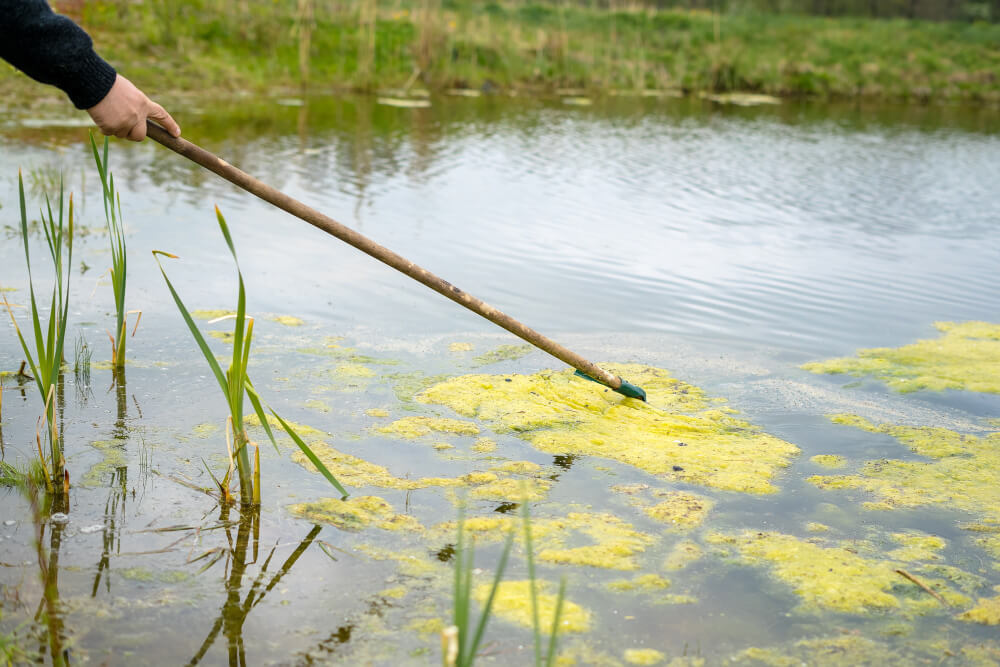
First thing is first, get rid of the existing weed. It’s time to grab your pond rake and blanket weed brush and physically remove as much algae as you can. Each handful you remove is removing nutrients from the pond. Try to leave the weed beside the pond for a day or two so any insects, tadpoles or other pond life get back into the water before composting it.
You can also add a blanket weed treatment such as Bradshaws Get Rid Of Blanket Weed Pond Treatment to eliminate any weed you may have missed.
Feed your fish, not your algae
If you have fish in your pond overfeeding may well be contributing to extra nutrients in the water. When uneaten food settles on the pond floor, it begins to decompose, releasing phosphorus, a naturally occurring compound, into the water. These nutrients begin to build up, acting as fertiliser for algae.
Refer back to your fish food guidelines to make sure you’re not overfeeding. As a simple rule, you only want to feed your fish what they can consume in two-five minutes.
It’s best to feed fish when they’re most active, this is usually when the water has had a chance to warm up a bit, ideally 10 am-3 pm, no more than twice a day. In colder months, fish are less active and may not need feeding so much.
You can use a sludge remover to clear up the layer of green gunk created by food waste and excrement. Nishikoi Clearwaters Sludge Remover introduces natural heterotrophic bacteria, which consume the sludge in a totally natural way.
Harness plant power
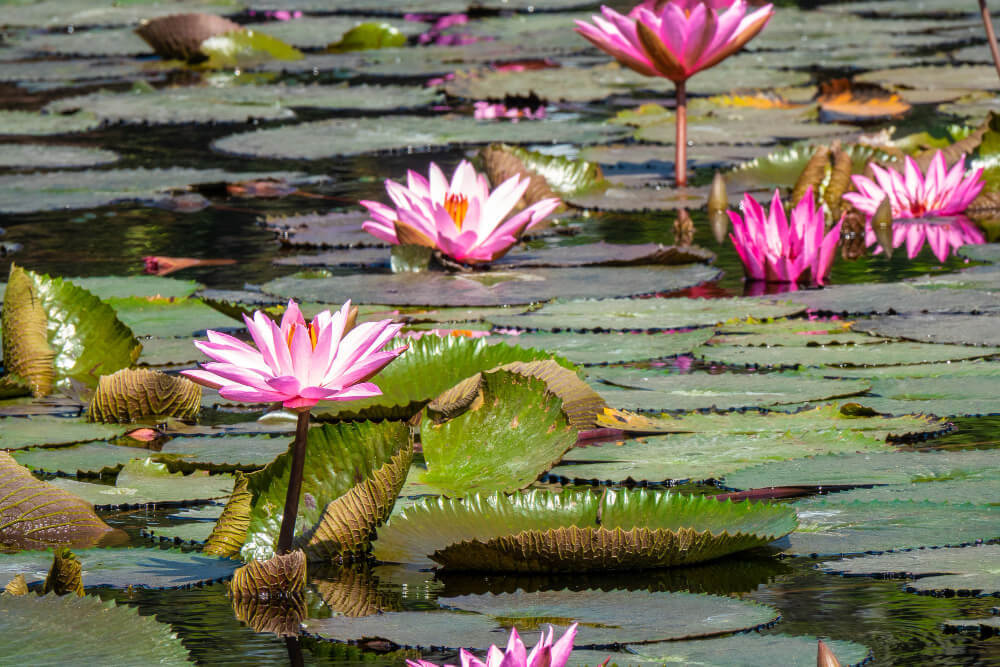
Healthy aquatic plants are your pond’s best natural defence against blanket weed. Fast-growing species like water lilies, watercress and frogbit compete directly with algae for nutrients such as phosphorus. Additionally, unlike algae, they require nutrients such as iron to thrive, so using a specialist aquatic plant food can help them grow stronger and outcompete blanket weed without encouraging algae growth. The more successfully your plants grow, the less food there is available for blanket weed.
Seek shade
Now we all love crystal clear water, but remember, blanket weed loves sunlight, relying on its rays to photosynthesise. A beautifully maintained and filtered pond with crystal-clear water allows more sunlight to penetrate deeper into the pond, fuelling growth. By introducing shady areas to your garden pond, you’re reducing the amount of direct sunlight reaching the water, limiting the energy available for algae growth. Aiming for around 50% surface shading is a great natural solution to blanket weed treatment.
Try some of the following:
- Floating plants
- Floating planters
- Tall grass borders
Surface-covering plants such as water lilies can also help keep water temperatures more stable and absorb nutrients that would otherwise feed blanket weed. The goal isn't to block out all light; it's to create a balanced environment where aquatic plants thrive without giving blanket weed the perfect conditions to take over.
Prevent regrowth by managing phosphates
While phosphorus is an essential nutrient for plant growth, too much of it will send weeds spiralling. Even if you don’t have fish in your pond, creating food waste, phosphates can still enter through simple garden run off or tap water top-ups. If you’re struggling to keep blanket weed at bay, it may be worth testing your ponds' phosphate levels with a water testing kit.
You can help control phosphate levels in your pond water by
- Removing fallen leaves with a net before they start to break down
- Maintain your filtration system
- Add phosphate removers to your filter
Specialist phosphate removers such as Oase AquaActiv PhosLess prevent algae from establishing by physically removing phosphate from pond water that would otherwise feed the weed. This product also binds together hydrogen sulfides to suppress and remove unpleasant odours caused by the decomposition of organic matter.
The technological solution
If you struggle to cope with pond weed clearance, then there’s a technological solution. The Vela T-tronic Blanket Weed Controller works by releasing carefully controlled copper ions into the pond water, helping to inhibit the growth of algae for a more hands-off approach to blanket weed treatment.
Installation is straightforward. The unit is fitted inline between your pond pump and filter and requires a mains power connection. A separate control unit allows you to adjust the output to suit your pond’s size and conditions, giving you greater control over algae management throughout the season.
The unit is safe for your fish however, excessive copper ions are not suitable for frogs and other amphibians.
Don’t be too hard on yourself
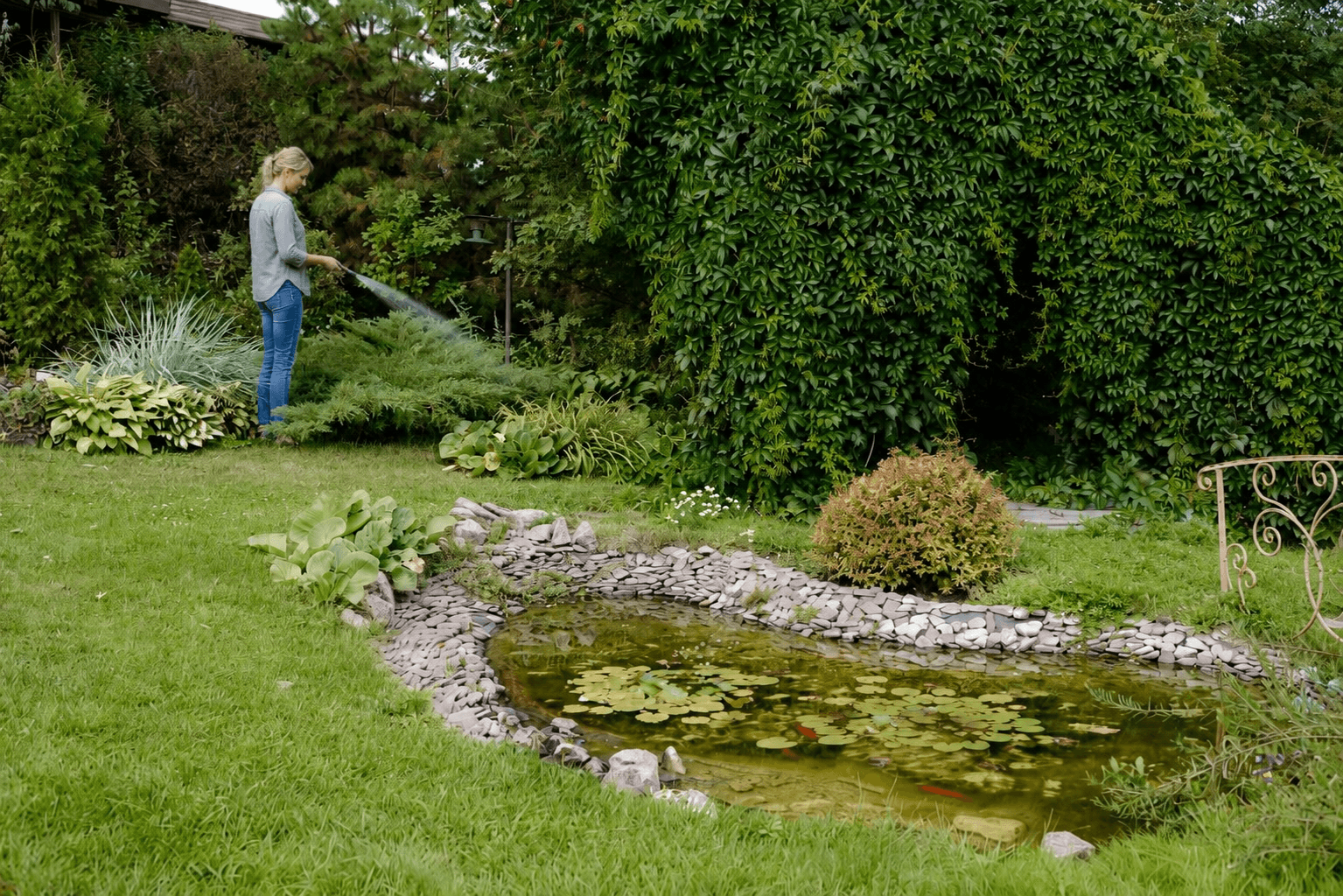
We know it’s frustrating, but remember, blanket weed often appears because you're doing many things right, not because you’re failing as a pond keeper. A small amount is perfectly normal, and complete eradication from a filtered pond isn’t always realistic or necessary. The goal is to keep it under control so it doesn't spoil your enjoyment of the pond.
The most effective long-term blanket weed cure is creating a pond where plants, rather than algae, make use of the available nutrients.
That means:
- Removing blanket weed regularly
- Reducing excess nutrients
- Avoiding overfeeding
- Increasing plant coverage
- Adding more shade
- Managing phosphate levels
By tackling the cause rather than simply treating the symptom, you’ll make your pond a far less attractive place for blanket weed to thrive.
Algae isn’t the end of the world, but if it’s becoming a nuisance, these simple steps will help you regain control and spend less time pulling green strands from your pond, and more time enjoying the fish, plants and crystal-clear water you’ve worked so hard to create.